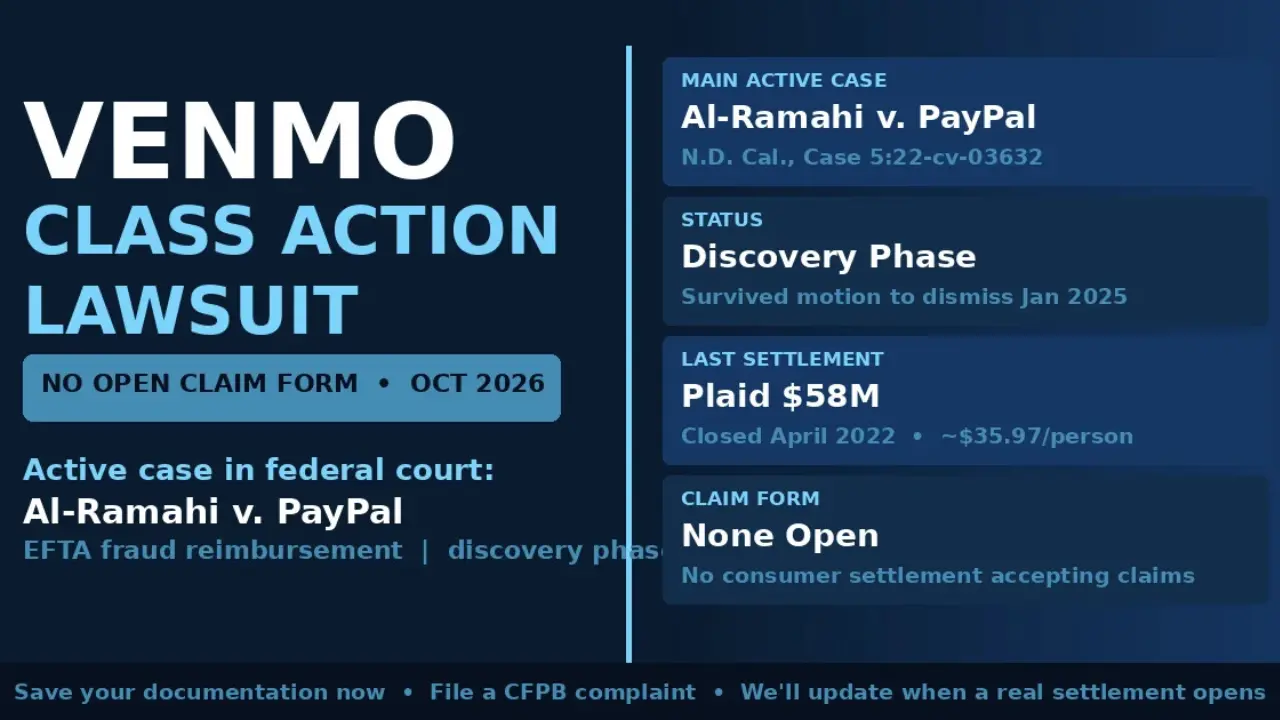
Searches for a Venmo Class Action Lawsuit do not point to one clearly identified, nationwide class-action case or one verified consumer settlement. The phrase may refer to private lawsuits involving Venmo users, public concerns about payment disputes or privacy, or government actions involving Venmo’s parent company, PayPal. Those are legally different matters.
Publicly reported regulatory actions have addressed issues involving Venmo, including privacy and payment-error practices. But a regulatory enforcement case is not a class action, and it does not automatically create a settlement payment for Venmo users. This article explains the distinction, what has been alleged in known government matters, and how consumers can verify any actual class-action or settlement notice.
What Is Venmo?
Venmo is a peer-to-peer payment service owned by PayPal. It allows users to send and receive money, pay participating businesses, and use certain card and account features. Because payments can involve bank accounts, debit cards, credit cards, account balances, and user privacy settings, disputes may involve several different types of consumer concerns.
A problem with a Venmo transaction does not by itself mean there is a class action. Individual disputes can involve unauthorized transfers, mistaken payments, account restrictions, chargeback issues, scams, or disagreements over the platform’s terms and error-resolution process.
What Is the Venmo Class Action Lawsuit About?
There is no single, verified case universally known as the “Venmo Class Action Lawsuit.” The search term is broad and can be used to describe different private consumer cases, advertising by law firms, or regulatory actions involving Venmo or PayPal.
For that reason, consumers should not assume that a social-media post, law-firm advertisement, or website using this phrase means a certified class action exists or that a settlement fund is available. A reliable legal notice should identify the court, case name, parties, and the official process for participating or opting out.
Two publicly reported government matters are often relevant to broader discussions of Venmo consumer issues.
FTC action concerning Venmo privacy and security representations
In 2018, the Federal Trade Commission announced a final order resolving allegations that Venmo had misled users about the privacy of transactions and the security of their financial information. The FTC alleged, among other things, that Venmo told users they could control transaction privacy while certain transactions could be shared publicly by default, and that the company made representations about security that the agency challenged.
The FTC order imposed restrictions and requirements on Venmo. It was an agency enforcement matter, not a court-certified consumer class action. The existence of that order does not establish that every Venmo user suffered a loss, and it does not by itself establish a consumer settlement claim process.
Isotonix Lawsuit: Unveiling the Legal Disputes Surrounding the Brand
CFPB allegations concerning payment errors and unauthorized transfers
In December 2024, the Consumer Financial Protection Bureau announced that it had sued PayPal, alleging that the company violated federal consumer-financial-protection law in connection with PayPal and Venmo payment services. The CFPB alleged that the company used disclosures that misled consumers about their ability to dispute errors and failed to provide required protections for certain unauthorized electronic fund transfers.
These were allegations by the CFPB, not findings that PayPal or Venmo had committed the alleged violations. PayPal’s position and any later court rulings must be determined from the case docket and official filings. The CFPB lawsuit is a government enforcement action; it is not a class action brought by Venmo users.
Is the Venmo Class Action Lawsuit a Class Action?
Not necessarily. A reference to a Venmo lawsuit does not establish that a class has been certified or that consumers are part of a class case. A private complaint may ask a court to represent a proposed class, but certification requires a separate court decision.
In a class action, one or more named plaintiffs seek to pursue claims on behalf of similarly situated people. Before a case becomes a certified class action, the court generally must decide whether the legal and factual issues can appropriately be handled on a group basis. Many cases described online as “class actions” are only proposed or putative class actions, and some never receive class certification.
Government cases brought by the FTC or CFPB are different. Those agencies enforce laws on behalf of the public or affected consumers under their statutory authority. Their cases are not consumer class actions, even when the alleged conduct could affect many people.
Is There a Venmo Class Action Lawsuit Settlement?
No single verified Venmo class-action settlement, claim deadline, or payment amount can be identified from the phrase “Venmo Class Action Lawsuit” alone. Consumers should rely on official settlement materials rather than broad online claims about a Venmo payout.
A legitimate class settlement usually has identifiable records, such as a court order granting preliminary approval, a settlement website or administrator named in court documents, a long-form notice, and instructions about deadlines. The notice should state the case caption, court, settlement class definition, claim requirements if any, and opt-out or objection deadlines.
Do not assume that a regulatory order creates an individual payment right. Some government resolutions may include consumer redress, while others impose conduct requirements, penalties, or reporting obligations. The actual order or settlement documents control.
Streamate Lawsuit Explained: Key Insights and Legal Implications
How to Verify a Venmo Lawsuit or Settlement Notice
Before providing personal information or submitting a claim, check whether the notice identifies a real legal proceeding. A clear notice should allow a consumer to verify the matter without relying on a marketing page or a social-media post.
- Look for the case name and court. A credible notice identifies the plaintiff or agency, the defendant, and the court handling the matter.
- Check the procedural status. Determine whether the case is merely filed, whether a class was certified, or whether a settlement has received preliminary or final court approval.
- Read the official notice. It should describe who is included, what claims are released, deadlines, and how to contact the settlement administrator.
- Use official records. Court dockets, official FTC or CFPB announcements, and materials issued by a court-approved settlement administrator are stronger sources than advertisements.
- Be cautious with requests for sensitive data. A claim process may require verification, but consumers should independently confirm the administrator. Website before disclosing account, banking, or identity information.
Consumers who received an email or postcard should compare it with information in the relevant court record or agency announcement. A genuine notice does not make a claim automatically valid. A person’s eligibility depends on the settlement definition and the official documents.
What Consumers Should Know About Venmo Disputes
A potential legal claim depends on the facts of the transaction, the account agreement, applicable law, and any required dispute procedures. This article cannot determine whether a particular consumer has a claim or is covered by a future or existing settlement.
For a transaction dispute, it may be helpful to preserve records while the issue is being addressed. Relevant materials can include payment confirmations, account activity, messages with the recipient. Screenshots, emails, dates, amounts, and communications with Venmo or a financial institution.
Consumers should also review Venmo’s current help materials and terms for reporting unauthorized activity or payment problems. A payment sent to the wrong person, a payment induced by a scam, and an unauthorized electronic transfer may be treated differently under platform rules and applicable law. Prompt reporting can matter, but users should consult the current official instructions for their situation.
Current Status of the Venmo Class Action Lawsuit
The available information does not support describing one overarching Venmo class action as pending, settled, or resolved. Instead, the term may refer to different matters with different parties, claims, and procedural histories.
The FTC’s 2018 Venmo matter resulted in a final agency order. The CFPB’s December 2024 action against PayPal involved allegations concerning PayPal and Venmo services, but it should not be described as a consumer class action. For any private lawsuit using Venmo in its name or involving Venmo users. The precise case caption and court docket are necessary to determine its current status.
The most reliable way to confirm a present status is to review the latest court docket entry or an official notice associated with the specific case.
Frequently Asked Questions
What is the Venmo Class Action Lawsuit about?
The phrase does not identify one confirmed lawsuit. It may refer to private consumer litigation, concerns about Venmo transactions, or government actions involving Venmo and its parent company, PayPal.
Is there a certified Venmo class action?
A broad reference to a Venmo class action does not prove that a court has certified a class. A lawsuit can seek class treatment without receiving certification. Consumers should review the specific court record or official class notice.
Has the Venmo Class Action Lawsuit been settled?
No single verified settlement can be confirmed from that search phrase alone. Do not rely on a claimed payment amount or deadline unless it appears in official settlement materials for an identified case.
Was Venmo involved in government enforcement actions?
Yes. The FTC issued a final order in 2018 concerning allegations about Venmo’s privacy and security representations. In December 2024, the CFPB announced a lawsuit against PayPal that included allegations involving PayPal and Venmo payment services. These matters are not the same as a private class action.
How can I tell whether a settlement notice is real?
Check for a case caption, court, official settlement administrator, court approval information, and clear deadlines. Verify those details through official court records or the relevant government agency rather than using a link in an unsolicited message alone.
Conclusion
The term Venmo Class Action Lawsuit is too broad to establish that there is one active class case, certified class, or settlement available to all Venmo users. Known government matters involving Venmo have included FTC privacy-related allegations and CFPB allegations concerning payment-error protections, but agency enforcement is not a consumer class action. Anyone researching a particular claim should identify the exact case and verify its status, any settlement terms, and any deadlines through official court or agency materials.