The california tint law controls how drivers can tint the windows of vehicles used on public roads. Window tint can reduce heat, block ultraviolet rays, improve privacy, and make driving more comfortable. However, California places strict limits on tint that affects a driver’s clear view. The rules for front windows are much stricter than those for rear windows. Drivers should understand visible light transmission, windshield restrictions, medical exemptions, and mirror requirements before installing tint. Following the correct rules can help drivers avoid unnecessary tickets and the cost of removing illegal tint.
What Is California Tint Law?
The california tint law includes rules found mainly in the California Vehicle Code. These rules limit materials that drivers place on windshields, front side windows, rear side windows, and rear windshields. California focuses strongly on keeping a clear view around the vehicle, especially from the driver’s position. The state generally allows more freedom for windows located behind the driver. However, special requirements can apply when a driver adds aftermarket tint. Vehicle owners should always consider the final darkness of the glass after the film is installed.
California Window Tint Limits
California treats each window differently because every window plays a different role in road visibility. The windshield and front side windows receive the strictest attention because drivers use them to watch traffic, pedestrians, cyclists, and road signs. Rear windows can usually have darker film as long as the vehicle meets mirror requirements.
| Vehicle Window | General Tint Requirement |
|---|---|
| Front windshield | Regular dark aftermarket tint is generally restricted |
| Front side windows | Only qualifying clear or very light material is allowed |
| Rear side windows | Darker tint is generally permitted |
| Rear windshield | Dark tint is generally permitted with two outside mirrors |
| Windshield top strip | Allowed when it meets placement and material requirements |
These basic rules make the california tint law different from regulations in many other states. Drivers moving into California should not assume that tint installed legally elsewhere will automatically meet California requirements.
Streamate Lawsuit Explained: Key Insights and Legal Implications
Front Side Window Tint Rules
California places strict limits on aftermarket film used on the driver’s and front passenger’s windows. Certain clear, colorless, and transparent materials can be installed mainly to reduce ultraviolet radiation. Qualifying film must allow a high percentage of visible light to pass through it.
The aftermarket material itself generally needs at least 88% visible light transmission. When combined with the original vehicle glass, the complete window should provide at least 70% visible light transmission under the applicable standard. Drivers should remember that the percentage printed on a tint package does not always represent the final result after installation.
Professional installers can measure the completed window using tint testing equipment. This step helps drivers determine whether their windows meet the required light level.
Windshield Tint Rules in California
The california tint law also places strong restrictions on windshield tint because the windshield provides the driver’s main view of the road. Drivers cannot simply cover the full windshield with dark aftermarket film.
California does allow certain material in a limited strip near the top of the windshield when it follows legal placement rules. The strip must not interfere with the driver’s clear view or create unsafe glare. Red or amber material should not be used for this permitted windshield strip.
Drivers should avoid applying dark film across the main viewing area. Even light-looking tint can become difficult to see through at night or during rain, fog, and other poor weather conditions.
Isotonix Lawsuit: Unveiling the Legal Disputes Surrounding the Brand
Rear Side Window Tint Rules
Rear side windows have fewer tint restrictions than front side windows. In general, drivers can use darker tint on side windows located behind the driver’s position. This gives vehicle owners more freedom to improve privacy, control sunlight, and reduce interior heat.
Some drivers select darker rear tint to protect passengers or belongings from direct visibility. However, extremely dark glass can make parking and reversing more difficult at night. Drivers should balance privacy with safe visibility instead of choosing tint based only on appearance.
The california tint law also restricts certain tint colors. Drivers should avoid prohibited colors and highly distracting materials that may affect safe road use.
Rear Windshield Tint and Mirror Requirements
California generally permits darker tint on the rear windshield when the vehicle has functional outside rearview mirrors on both the left and right sides. These mirrors help the driver see vehicles and road users behind the car when visibility through the rear glass becomes limited.
This requirement becomes especially important with very dark rear tint. A driver may struggle to see through dark rear glass during nighttime driving. Two properly adjusted side mirrors can provide a safer view of surrounding traffic.
Drivers should make sure both mirrors remain secure, clean, and properly positioned. A legal tint setup should never reduce the driver’s ability to operate the vehicle safely.
What Does VLT Mean for Window Tint?
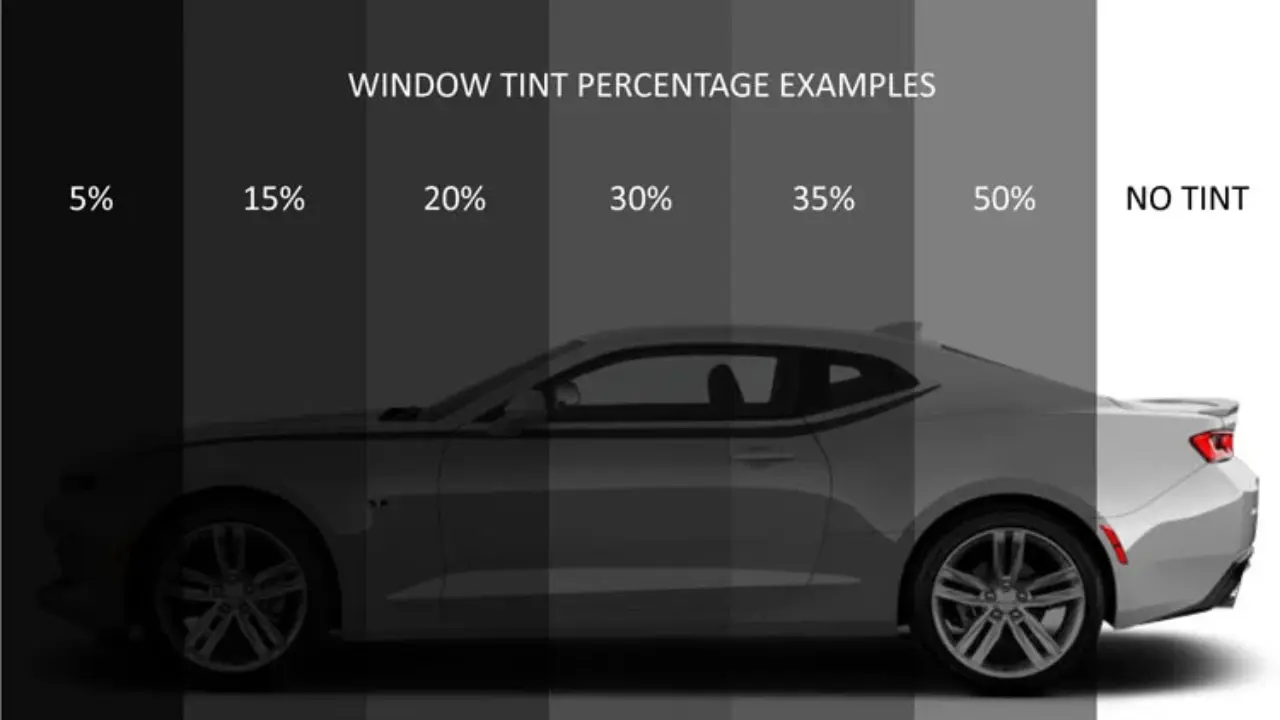
VLT stands for Visible Light Transmission. It shows how much visible light can travel through the window. A higher VLT percentage means the window lets more light pass through, while a lower percentage produces darker glass.
For example, a window with 70% VLT allows much more light to pass through than a window with 20% VLT. Drivers sometimes confuse tint percentage because they assume a higher number means darker tint. In reality, the opposite is normally true.
Understanding VLT is important when following the california tint law because front window compliance depends heavily on light transmission.
Medical Exemptions for Window Tint
Some people have health or vision conditions that require extra protection from sunlight. California provides limited exemptions for qualifying drivers or passengers when they have proper medical documentation.
Certain removable sun-screening devices may be permitted when a licensed medical professional confirms that a person needs additional protection from the sun. These devices must still meet specific safety conditions. Some qualifying clear UV-protection materials may also receive special treatment under the rules.
A medical condition does not automatically give drivers permission to install extremely dark permanent tint on every window. Drivers should keep the required documentation available and make sure any medical sun protection meets applicable vehicle rules.
Is Reflective Tint Legal in California?
Drivers also need to consider glare and reflectivity. Highly reflective material can create dangerous glare for nearby motorists and reduce overall road safety. Tint should not produce a mirror-like effect that interferes with other drivers.
A high-quality film can provide UV protection and heat reduction without extreme reflectivity. Drivers should tell professional installers that they want a film suitable for road use in California. This can reduce the chance of choosing material that creates visibility or compliance problems.
What Happens If Window Tint Is Too Dark?
A police officer may stop a vehicle when the tint appears to violate applicable requirements. A driver may receive a citation and may have to correct the problem. In some cases, correcting the violation can involve removing illegal film and showing that the vehicle now meets the law.
The total cost can include the citation, court-related charges, tint removal, and replacement film. Costs can vary depending on the situation and location. Therefore, checking compliance before installation is often cheaper than fixing illegal tint later.
The california tint law applies to vehicles driven on public roads, so buying a used car with existing tint does not automatically protect the new owner from enforcement.
Tips for Choosing Legal Window Tint
Drivers should choose an experienced installer who understands California vehicle tint requirements. Ask the installer about the film’s VLT rating and how the factory glass will affect the final percentage. A proper measurement after installation can provide additional confidence.
Drivers should also keep any required installation certificates or medical documents inside the vehicle. Avoid choosing a tint only because it looks attractive in photos. Visibility at night, during heavy rain, and in parking areas matters just as much as privacy.
Quality tint can still provide useful heat and UV protection without making the windows extremely dark.
Frequently Asked Questions
Can You Have 20% Tint in California?
A 20% tint is generally too dark for ordinary front side windows. Darker tint may be used on rear side windows and, under applicable conditions, the rear windshield.
Can You Tint Your Front Windshield?
Drivers generally cannot apply regular dark tint across the entire front windshield. Limited material may be allowed near the top when it meets legal requirements.
Is 5% Tint Legal in California?
Very dark 5% tint is not suitable for ordinary front side windows. It may be possible on certain rear windows when other vehicle requirements are satisfied.
Can Police Stop You for Dark Tint?
Yes. Officers can take enforcement action when they believe window tint violates vehicle equipment requirements or significantly reduces the driver’s view.
Does Factory Tint Count?
Factory glass can already reduce the amount of light passing through a window. Therefore, installers should consider the combined light transmission of both the original glass and aftermarket material.
Conclusion
The california tint law aims to balance privacy, UV protection, comfort, and road safety. California places its strongest restrictions on the windshield and front side windows while allowing greater flexibility for rear windows. Drivers should understand VLT percentages, mirror requirements, medical exceptions, and visibility rules before installing film. Choosing an experienced tint installer can help prevent compliance problems. Most importantly, drivers should select tint that provides useful sun protection while keeping a clear view of traffic in both daytime and nighttime conditions.