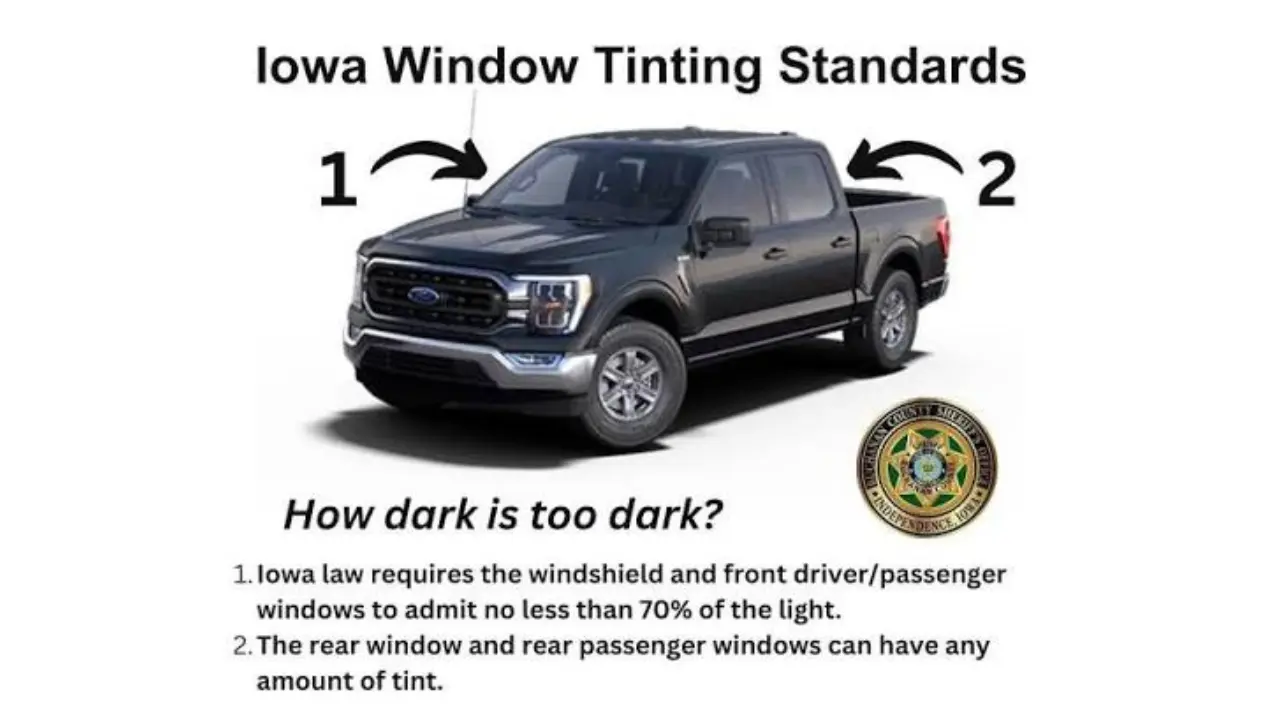
Window tint can reduce glare, limit heat inside a vehicle, and provide extra privacy. However, drivers must follow state rules when choosing tint for their cars. The iowa window tint law sets specific light-transmission requirements for windshields and the windows beside the driver.
Iowa made an important change to its tint rules in 2026. House File 766 was signed on May 15, 2026, and became effective on July 1, 2026. The law established a 70% minimum light transmittance for the windshield and 50% for the front side windows.
What Is the Iowa Window Tint Law?
The iowa window tint law controls how much visible light must pass through certain vehicle windows. Visible Light Transmission, commonly called VLT, describes the percentage of visible light that passes through glass and tint.
A higher VLT percentage means the window allows more light through and therefore looks lighter. A lower percentage means the window is darker. For example, 50% VLT allows roughly half of visible light to pass through.
The 2026 law specifically states that a front windshield cannot have less than 70% light transmittance. The side windows immediately to the right and left of the driver cannot have less than 50% light transmittance.
Streamate Lawsuit Explained: Key Insights and Legal Implications
Iowa Window Tint Limits at a Glance
Drivers should understand which windows have specific limits before installing aftermarket tint. Choosing the correct film can help avoid legal problems after installation.
| Vehicle Window | Minimum Light Transmittance |
|---|---|
| Front windshield | 70% VLT |
| Front driver-side window | 50% VLT |
| Front passenger-side window | 50% VLT |
| Other side windows | Not given a new percentage limit in HF 766 |
| Rear window | Not given a new percentage limit in HF 766 |
House File 766 specifically changed the windshield and windows immediately beside the driver. A proposal introduced separately included a 35% requirement for other side and rear windows, but that language should not be confused with the law enacted through HF 766.
Windshield Tint Rules in Iowa
Under the current iowa window tint law, a vehicle’s front windshield must meet a minimum transparency level of 70% light transmittance. Drivers should consider the combined effect of factory glass and any film applied to it.
The windshield plays an important role in road visibility. Dark glass can make pedestrians, cyclists, road signs, and other vehicles harder to see, particularly during nighttime driving or poor weather.
Before adding windshield film, drivers should ask a professional installer to measure the final VLT. This simple check can help ensure the completed installation meets Iowa’s legal requirement.
Isotonix Lawsuit: Unveiling the Legal Disputes Surrounding the Brand
Front Side Window Tint Requirements
The biggest 2026 change affects the side windows directly beside the driver. The Iowa window tint law now allows those windows to have a minimum of 50% light transmittance, rather than the previous administrative standard of 70%.
Before the change, Iowa’s administrative rule defined excessively dark windshield and front-side glass as glass falling below 70% light transmittance. The new statute therefore gives drivers more flexibility for the windows beside the driver.
Still, 50% VLT should not be confused with very dark privacy tint. A 50% window remains relatively light because it must allow at least half of visible light to pass through.
What About Rear Side Windows and Rear Glass?
The enacted 2026 legislation focuses on the windshield, the side windows immediately beside the driver, and sidewings located forward of the driver. HF 766 does not establish the proposed 35% VLT requirement for other rear and side windows.
However, Iowa Code also requires vehicle windows to permit clear vision. Drivers should therefore avoid modifications that create unsafe visibility conditions even when a particular window does not have the same percentage requirement as the front glass.
Understanding VLT Before Buying Window Tint
Knowing VLT makes the iowa window tint law much easier to understand. Tint percentages describe light transmission rather than simply telling drivers how dark a film appears.
A 70% VLT window lets much more visible light through than a 35% or 20% window. Likewise, a 50% VLT front-side window remains significantly lighter than many dark aftermarket tint options.
Factory glass can also affect the final reading. If a vehicle already has slightly tinted glass, adding a film marked 50% does not necessarily produce exactly 50% total VLT. Professional testing can provide a more reliable final measurement.
Medical Exemptions and Older Iowa Rules
Medical exemptions deserve special attention because older Iowa rules included limited grandfathered situations. Iowa’s administrative rules stated that no new dark-window exemption would be granted from the former transparency standard after July 4, 2012.
Certain vehicles with qualifying tint installed before that date could remain eligible when connected to an older physician-certified Form 432020. The exemption had specific conditions and required the form to remain in the applicable vehicle.
Because the statutory limits changed in July 2026, anyone relying on an older exemption should verify the current status before modifying a vehicle.
How Police Can Check Window Tint
Drivers should not rely only on how dark a window looks. The iowa window tint law uses measurable light-transmission standards, which makes the actual VLT percentage important.
A tint meter can measure how much light passes through a window. This type of measurement gives a more objective result than judging darkness only by appearance.
For this reason, vehicle owners should consider asking a tint installer for a VLT measurement after installation. Keeping the vehicle within the legal percentage is safer than selecting film based only on appearance.
Tips for Choosing Legal Window Tint in Iowa
Before buying tint, tell the installer that the vehicle will operate in Iowa and ask about the completed VLT level. A reputable installer should understand that film and factory glass work together to determine the final measurement.
Drivers should pay particular attention to the 70% windshield and 50% front-side-window requirements. They should also consider visibility at night, during heavy rain, and in other low-light driving conditions.
The safest approach is to leave a small margin above the legal minimum. That choice can reduce the chance that normal measurement differences place the glass below the required level.
Why Iowa Changed Its Window Tint Rules
Iowa lawmakers approved House File 766 after the measure moved through both chambers of the legislature. The House passed it in March 2025, while the Senate passed it in March 2026. The governor signed the measure on May 15, 2026.
The legislation officially became effective on July 1, 2026. This date matters because online articles describing Iowa’s older 70% requirement for front side windows may now contain outdated information.
Common Mistakes Drivers Should Avoid
One common mistake involves buying a tint film based only on the percentage printed on its packaging. Existing factory glass can affect the final amount of light that passes through the finished window.
Another mistake involves following old information. The iowa window tint law changed in 2026, so guides based entirely on earlier rules may incorrectly state that front side windows must still provide 70% VLT.
Drivers should also avoid assuming that tint rules remain identical across state lines. Someone who regularly drives outside Iowa should review the laws of other states where the vehicle will be used.
Final Thoughts
Understanding the iowa window tint law helps drivers choose tint that offers comfort and privacy without ignoring legal requirements. As of the July 1, 2026 change, the windshield must provide at least 70% light transmittance, while the side windows immediately beside the driver must provide at least 50%.
Before installing aftermarket film, drivers should confirm the finished VLT rather than relying only on the advertised film percentage. Following current Iowa requirements can provide the benefits of window tint while keeping the vehicle compliant and maintaining safe road visibility.