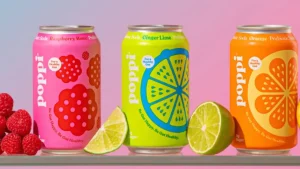
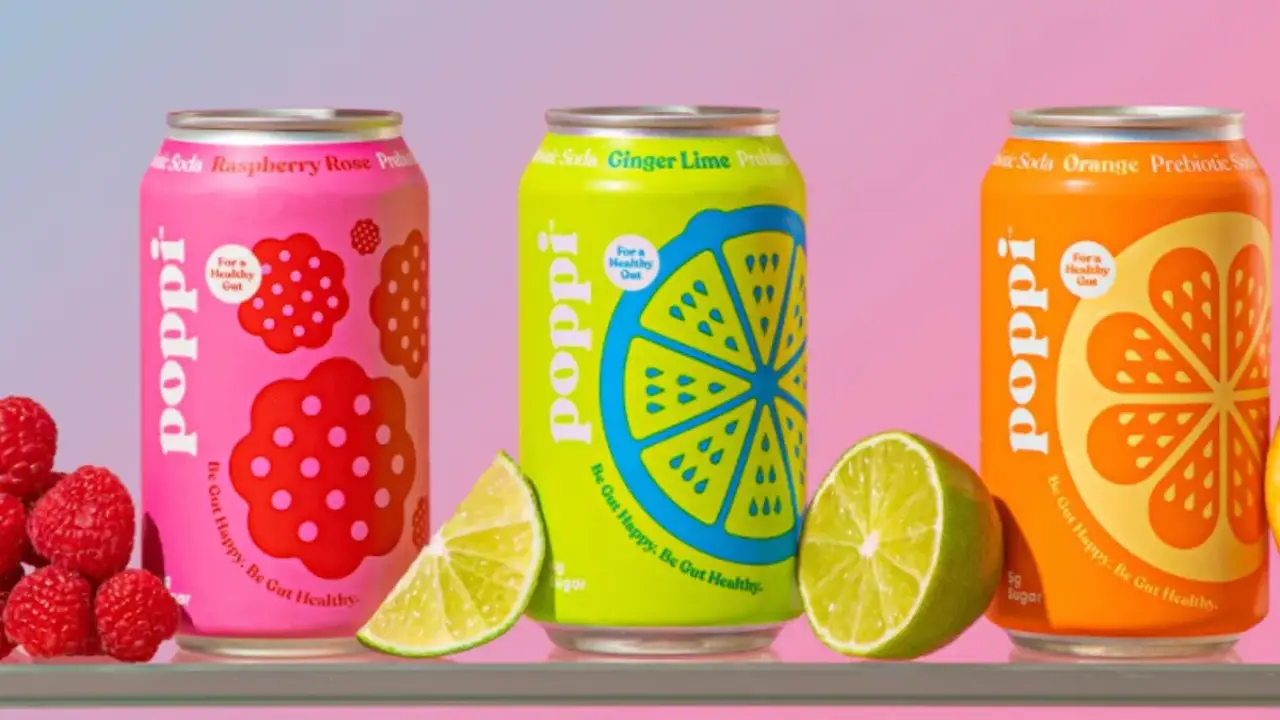
The Poppi Soda Lawsuit concerns consumer allegations that Poppi’s marketing overstated the digestive-health benefits of its prebiotic soda. The case was filed as a proposed consumer class action, not as a court-certified class at the time the complaint was filed. In 2025, the parties reached an $8.9 million proposed settlement that received preliminary court approval. That is not the same as a finding that Poppi’s advertising was unlawful or that the company admitted wrongdoing.
This article explains the allegations, class-action status, available settlement details, deadlines reported in the court-approved notice process, and the difference between a settlement and a ruling on the merits.
What Is Poppi?
Poppi is a brand of sparkling soda marketed with prebiotic fiber. Its products have been sold in multiple flavors through retailers and online. The marketing at issue in the lawsuit included statements and branding connected to gut health and prebiotic benefits.
The legal dispute did not claim that every Poppi product was unsafe. Instead, it focused on whether reasonable consumers were allegedly misled about the health benefits they could expect from drinking the beverages.
What Is the Poppi Soda Lawsuit About?
The Poppi Soda Lawsuit alleged that the company’s gut-health marketing was misleading because the amount of prebiotic fiber in a serving was not enough to provide the claimed digestive benefits. Poppi disputed liability, and the case was resolved through a proposed class settlement rather than a court decision establishing that the allegations were true.
The case is generally identified as Ervin v. VNGR Beverage, LLC, filed in the U.S. District Court for the Northern District of California. VNGR Beverage, LLC did business as Poppi. The complaint sought relief on behalf of consumers who bought Poppi beverages based on the challenged marketing.
Streamate Lawsuit Explained: Key Insights and Legal Implications
Key Allegations in the Complaint
The plaintiff’s claims centered on the relationship between the products’ prebiotic-fiber content and their advertised health message. These were allegations in a civil complaint, not judicial findings.
Gut-Health and Prebiotic Claims
According to the complaint, Poppi promoted its soda with messages that consumers could understand as promising meaningful gut-health benefits. The plaintiff alleged that a serving contained about two grams of prebiotic fiber and that this amount was insufficient to support the advertised benefits.
The complaint also discussed the products’ sugar content in arguing that the beverages did not deliver the overall health value suggested by the marketing. Whether a particular marketing statement is misleading can depend on its full context, the product label, the evidence offered by the parties, and applicable consumer-protection law.
Consumer-Protection Theory
The lawsuit asserted consumer-protection and related claims based on the allegation that consumers paid more for Poppi because of the challenged health-related representations. In a case like this, the plaintiff generally seeks to show that the marketing would matter to a reasonable buyer. Those claims were not decided by a trial or final merits judgment.
Isotonix Lawsuit: Unveiling the Legal Disputes Surrounding the Brand
Is the Poppi Soda Lawsuit a Class Action?
It began as a proposed, or putative, class action. A proposed class action asks a court to allow one or more plaintiffs to pursue claims for a larger group of similarly situated people. Filing a complaint that seeks class treatment does not itself certify a class.
The case later moved into a proposed settlement process. For settlement purposes, the court’s preliminary approval process can define a settlement class and authorize notice to potential class members. That procedure is different from a ruling after contested class-certification litigation that the claims satisfy every requirement for a litigation class.
People who purchased Poppi should not assume they were automatically entitled to payment. Eligibility depended on the settlement definition, the purchase period, any required claim form, and the final terms approved by the court.
Lawsuit Timeline and Major Developments
| Development | What it means |
|---|---|
| May 2024 | A consumer filed the proposed class-action complaint in federal court in Northern California. |
| 2025 | The parties announced an $8.9 million proposed class settlement. |
| July 18, 2025 | The court preliminarily approved the proposed settlement and authorized the notice and claims process. |
| September 26, 2025 | Reported deadline for submitting a settlement claim form. |
| November 20, 2025 | Reported date for the final approval hearing. |
Preliminary approval means a judge determined that the proposed settlement was suitable to send to the settlement class for notice and review. It does not mean the court found the complaint’s allegations proven. Final approval, if granted, is the later step that determines whether the settlement becomes effective under its terms.
What Did Poppi Say?
Poppi did not admit liability through the proposed settlement. Class settlements commonly state that the defendant denies the allegations and that the agreement is a compromise to avoid further litigation risks and costs. A settlement should not be read as a court finding that a defendant violated the law.
Likewise, the plaintiff’s allegations should not be treated as proof that Poppi products failed to provide any benefit to every consumer. The case was resolved through settlement procedures rather than a merits ruling after trial.
Is There a Poppi Soda Lawsuit Settlement?
Yes. The parties reached an $8.9 million proposed settlement, and the court preliminarily approved it in July 2025. The settlement was designed to resolve claims tied to purchases of Poppi products during the covered period, subject to final court approval and other settlement conditions.
Public settlement materials described a class period running from January 23, 2020, through July 18, 2025, for people in the United States who bought Poppi products for personal or household use. Exclusions can apply, including to certain people connected with the case, the court, or the defendant.
Reported Cash-Payment Terms
The settlement notice described different claim options based on whether a claimant had proof of purchase. Claimants without proof could seek a cash payment of up to $16, subject to the settlement’s terms. Claimants with valid proof of purchase could seek $0.75 per eligible Poppi product, subject to the settlement rules.
These figures were not guaranteed individual payments. The amount actually paid could be reduced or adjusted under the settlement, including if the number or value of valid claims exceeded the money available for payments after court-approved fees, costs, expenses, and other settlement obligations.
Claim and Objection Deadlines
Settlement notices identified September 26, 2025, as the claim deadline. They identified August 29, 2025, as the deadline to request exclusion from the settlement or submit an objection. Consumers should use the official settlement notice and court documents—not social-media posts, advertisements, or lead-generation sites—to confirm whether a deadline has passed and whether any later court order changed the schedule.
Current Status of the Poppi Soda Lawsuit
The latest publicly reported posture is a proposed settlement that received preliminary approval, with a final approval hearing scheduled for November 20, 2025. Preliminary approval is not final settlement approval, and it does not resolve the underlying allegations as proven facts.
Because a court docket or final approval order controls the legal status, readers seeking the most current answer should review official case records and settlement materials. If final approval was granted, the settlement may become effective only after all conditions in the agreement are met, including any period for appeal. If final approval was denied or the agreement did not become effective, the lawsuit could proceed differently.
What Consumers Should Know
Consumers who believe they fall within the settlement period should keep any available receipts, online order confirmations, store loyalty-account records, product photographs, or other purchase documentation. Such records may help support a claim where the settlement allows proof-of-purchase submissions.
Before providing personal information or payment details, verify that a notice, website, or form is part of the official court-approved settlement process. The case caption, court, eligibility language, and deadline should match the official notice. A third-party site discussing the Poppi Soda Lawsuit does not itself establish eligibility or a right to payment.
This information is general and does not determine whether any particular person has a valid claim. Individual rights can depend on the settlement’s final terms, the purchaser’s facts, and applicable law.
Frequently Asked Questions
What is the Poppi Soda Lawsuit about?
The lawsuit alleged that Poppi’s health-related marketing, including its gut-health messaging, was misleading because the product allegedly did not contain enough prebiotic fiber to provide the advertised benefits. Poppi did not admit liability, and the allegations were not decided at trial.
Is the Poppi Soda Lawsuit a class action?
It was filed as a proposed class action. The later settlement process defined a settlement class for notice and resolution purposes, which is different from a contested ruling that permanently certified a litigation class.
Has the Poppi Soda Lawsuit been settled?
The parties reached an $8.9 million proposed settlement, and the court preliminarily approved it on July 18, 2025. Preliminary approval is not the same as final approval.
Who was included in the proposed settlement class?
Public settlement materials described U.S. consumers who purchased Poppi products for personal or household use between January 23, 2020, and July 18, 2025, subject to stated exclusions and settlement terms.
What was the claim deadline?
The reported deadline to submit a claim was September 26, 2025. Anyone checking the status after that date should consult official settlement materials or the court docket for any changes or final orders.
Did a court find that Poppi’s advertising was false?
No court finding on the merits is established by the proposed settlement. The agreement resolved disputed allegations and did not constitute an admission of wrongdoing by Poppi.
Conclusion
The Poppi Soda Lawsuit alleged that Poppi’s prebiotic and gut-health marketing misled consumers about the benefits of its soda. Those allegations were not established by a court judgment. The case was brought as a proposed class action and moved to an $8.9 million proposed settlement that received preliminary approval in 2025. Consumers should rely on official settlement and court materials to confirm final approval, deadlines, and any payment eligibility.