How Much Does a Divorce Cost? In the United States, a divorce can range from a few hundred dollars for a simple, uncontested case handled without lawyers to many thousands of dollars when spouses dispute property, support, or parenting issues. There is no single national price because divorce is governed by state law and the total depends heavily on whether the case is contested, the professionals involved, and how long it takes to resolve.
Divorce is generally a family-law court process, not a class action, consumer settlement, or single nationwide lawsuit. This guide explains the costs that commonly arise, why estimates vary, what a “low-cost” divorce may leave out, and how to review fees carefully before making decisions.
How Much Does a Divorce Cost in the United States?
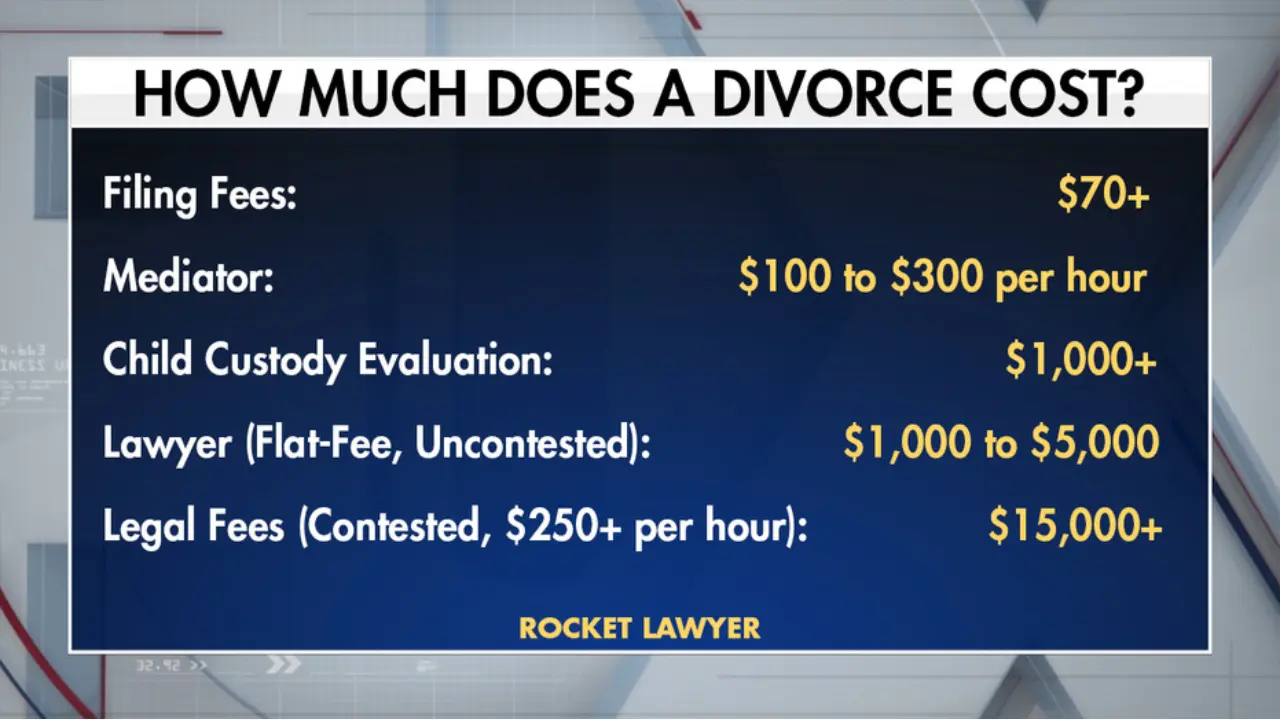
A straightforward uncontested divorce may cost roughly several hundred to a few thousand dollars, including court filing fees and document preparation. A contested divorce involving attorneys often costs several thousand dollars per spouse and can cost far more when there are disputes over children, income, real estate, retirement accounts, or business interests.
These are broad planning ranges, not fixed prices or legal quotes. Court filing fees, attorney rates, required procedures, and the amount of work needed vary by state, county, and individual case. One spouse’s expenses may also differ substantially from the other’s.
| Type of divorce process | Common cost pattern | Why costs differ |
|---|---|---|
| Do-it-yourself uncontested divorce | Usually filing fees plus document, service, or notary costs | Spouses agree on all required terms and complete forms themselves |
| Uncontested divorce with limited legal help | Filing fees plus attorney review or document-preparation charges | A lawyer may draft or review an agreement without handling the entire case |
| Mediated divorce | Filing fees plus mediator fees and any separate legal advice | Cost depends on the mediator’s rate and number of sessions needed |
| Contested divorce with attorneys | Attorney retainers, hourly fees, filing fees, and possible expert expenses | Disagreements, court motions, discovery, and hearings increase legal work |
| Trial or complex-property divorce | Potentially substantial attorney and expert costs | Trial preparation, testimony, valuations, and extensive financial review can be expensive |
Published national surveys may report average divorce costs, but an average can be misleading. A short, agreed case and a multi-year case involving trial are not comparable. It is usually more useful to identify the likely process for your circumstances and ask local professionals about their billing practices.
Streamate Lawsuit Explained: Key Insights and Legal Implications
What Costs Are Included in a Divorce?
The court filing fee is only one part of the possible cost. The filing spouse usually pays the initial fee unless a court waives it based on financial eligibility or later orders one party to reimburse some costs. The responding spouse may also pay a separate response or appearance fee in some jurisdictions.
Court filing and service fees
States and counties set their own fees. In addition to filing a petition, a case may involve charges for copies, certified records, motions, required parenting classes, or other court services. If formal service of legal papers is required, a sheriff, constable, or private process server may charge a separate fee.
Some courts permit a fee-waiver application for people who cannot afford filing costs. Approval is not automatic and depends on the court’s rules and the applicant’s financial information. A fee waiver may cover some court charges but does not necessarily pay for a lawyer, mediator, or expert.
Attorney fees and retainers
Family-law attorneys commonly bill by the hour, although some offer flat fees for limited, uncomplicated work. Hourly rates vary by location, lawyer experience, and the case’s demands. Lawyers often request an advance payment called a retainer. In many arrangements, the lawyer bills time and expenses against that retainer and may request another deposit if it is used.
Ask whether a quoted amount is a true flat fee or only an initial retainer. Also ask what work is included, whether phone calls and emails are billed, how often invoices are sent, and whether staff time has a different rate. A lower hourly rate does not necessarily mean a lower total bill if the matter takes longer.
Mediation and collaborative costs
Mediation uses a neutral third party to help spouses negotiate. It can reduce conflict and legal fees when both spouses participate in good faith and can exchange complete information. But mediation is not free, and it does not guarantee agreement. Each spouse may still want separate legal advice before signing a final settlement.
Collaborative divorce is another negotiated process that generally involves specially trained professionals. Depending on the team and services used, it may involve attorneys and financial or mental-health professionals. Its cost structure should be discussed in advance.
Experts and financial work
Complex cases may require appraisers, accountants, business-valuation professionals, vocational experts, child specialists, or other experts. For example, determining the value of a closely held business or tracing separate and marital property can require detailed records and professional analysis. These expenses can become a major part of the overall cost.
Isotonix Lawsuit: Unveiling the Legal Disputes Surrounding the Brand
Why Does the Cost of Divorce Vary So Much?
The largest factor is usually the level of disagreement. When spouses agree on property division, debt, support, and parenting terms, they may be able to complete the court process with fewer filings and less professional time. When they disagree, the court process can involve negotiation, information exchange, temporary orders, motions, hearings, and possibly trial.
Common cost drivers include:
- Children: Disputes over legal decision-making, parenting time, relocation, or child support may require more negotiation or court involvement.
- Property and debt: A home, retirement accounts, investments, business interests, or significant debt can require records, valuation, and specialized orders.
- Spousal support: Disagreement about alimony or maintenance can add financial analysis and litigation.
- Incomplete financial information: Missing records or disputes over disclosures can prolong the case.
- Emergency issues: Requests for temporary support, exclusive use of a home, or protective orders may require prompt court action.
- Communication and conduct during the case: Repeated conflict, missed deadlines, and unnecessary filings can add billable work.
State law also matters. States use different rules for property division, waiting periods, residency, support, and required disclosures. A court’s docket and local procedures can affect timing, which in turn can affect attorney fees.
Contested vs. Uncontested Divorce Costs
An uncontested divorce generally means the spouses have a complete agreement on the issues the court must decide. That does not mean the case has no paperwork or legal consequences. The court may still require financial disclosures, a written settlement agreement, parenting documents, and a final judgment.
A contested divorce means one or more material issues remain unresolved. The case can become contested even if spouses agree on many points. For instance, they may agree to divorce but disagree about the home, a parenting schedule, or the amount of support.
It is often possible for a contested case to settle before trial. Settlement may limit further expenses, but parties should understand the agreement’s long-term effects before signing. The right approach depends on the facts, safety concerns, financial complexity, and applicable state law.
Can You Get Divorced Without a Lawyer?
In many states, people may represent themselves in divorce court. Courts often provide standardized forms and procedural information for self-represented parties. This can reduce legal fees in a simple case, but court staff generally cannot provide individualized legal advice or tell a person what settlement terms they should accept.
Self-representation may be more manageable when there are no minor children, limited assets and debts, full agreement, and no concern that either spouse is hiding financial information. Even then, a mistake in a decree, property transfer, retirement order, or support arrangement may be difficult or costly to fix later.
Limited-scope representation can be a middle option. A lawyer may review forms, explain a proposed agreement, prepare a specific document, or advise on a defined issue while the person handles other tasks. Availability and rules for this service vary by jurisdiction.
Ways to Control Divorce Costs Without Giving Up Important Rights
Lowering costs should not mean rushing into an unsafe or uninformed agreement. Still, practical organization and clear communication can reduce avoidable work.
- Gather tax returns, pay stubs, bank statements, loan records, retirement statements, insurance information, and property documents early.
- Use written communication that is factual, brief, and focused on needed decisions.
- Prepare questions before meetings with a lawyer or mediator.
- Ask for a written fee agreement and review invoices promptly.
- Discuss whether a negotiated process, mediation, or limited-scope legal service fits the case.
- Do not sign deeds, retirement documents, or settlement papers without understanding their effect.
For people facing domestic violence, coercive control, or a serious power imbalance, joint negotiation may not be appropriate or safe. Confidential help from a qualified attorney, legal-aid organization, or local domestic-violence resource may be important.
Who Pays for a Divorce?
Each spouse often pays their own attorney at the start of a case. However, state laws may allow a judge to order one spouse to contribute to the other’s attorney fees in certain circumstances. The outcome can depend on financial resources, conduct in the litigation, the reasonableness of fees, and other factors set by state law.
Do not assume a higher-earning spouse will automatically be ordered to pay all legal fees. Likewise, do not assume that a fee request means the court will grant it. A lawyer or court self-help center can explain the procedures that apply locally, but only a court can decide a disputed request.
Is There a Divorce Class Action or Settlement?
No. “How Much Does a Divorce Cost” is a general family-law question, not the name of a verified class action, lawsuit, or settlement. Divorce cases are ordinarily individual matters because each marriage, financial situation, parenting arrangement, and state-law requirement is different.
There is no general divorce settlement fund, nationwide claim deadline, or automatic payment for people who get divorced. A marital settlement agreement, when spouses reach one, is a private agreement resolving issues in their own divorce case. It is not the same as a consumer class-action settlement.
What Should You Ask Before Hiring a Divorce Lawyer?
A consultation can help you understand the likely process, but estimates are necessarily limited at the beginning of a contested case. Consider asking:
- What is your hourly rate, and are there separate rates for paralegals or other staff?
- How much is the initial retainer, how is it held, and when might it need to be replenished?
- What expenses are billed separately from legal fees?
- What steps are likely in this county and what could make the case more expensive?
- Can you provide limited-scope services or review an agreement instead of full representation?
- How will you communicate, and how often will I receive invoices?
Comparing fee agreements can be useful, but price alone should not control the decision. Make sure the lawyer is licensed in the relevant state and that the scope of representation is clear in writing.
Conclusion
How Much Does a Divorce Cost depends mainly on the state, court fees, professional help used, and whether spouses can resolve the issues without extensive litigation. A simple agreed divorce may be relatively affordable, while a contested or financially complex case can cost many thousands of dollars or more.
There is no nationwide divorce class action or general settlement payment tied to this question. Before relying on an online estimate, review local court fees, request clear written information about professional charges, and consider getting advice suited to the specific facts of the case.
Frequently Asked Questions
What is the cheapest way to get a divorce?
A do-it-yourself uncontested divorce is often the least expensive option when both spouses fully agree and the case is simple. Court filing fees and required service costs may still apply, and low cost does not remove the need to complete accurate legal documents.
How much are divorce filing fees?
Filing fees vary by state and county. The local family court or clerk’s office can provide the current amount and explain whether a fee-waiver application is available.
Does an uncontested divorce mean no court costs?
No. An uncontested case commonly still requires a court filing fee and may involve service, copies, notary, document-preparation, or attorney-review costs. The exact requirements depend on local rules.
Can a spouse be ordered to pay divorce attorney fees?
Possibly. Many states permit courts to consider requests for attorney-fee contributions, but the rules and outcomes vary. Such an order is not automatic.
Is there a claim deadline or settlement payment for divorce costs?
No general claim deadline or settlement payment exists for people who divorce. A divorce settlement agreement concerns the spouses in a particular case and should not be confused with a class-action settlement.