
Many couples wonder, does florida have common law marriage? It is a common question, especially for people who have lived together for many years without a formal wedding. Some believe that simply living together creates the same legal rights as marriage. However, Florida law is different from what many people expect.
Understanding the rules can help you protect your rights and avoid legal problems in the future. This guide explains whether Florida recognizes common law marriage, how the law works, and what options are available for unmarried couples.
Does Florida Have Common Law Marriage?
The simple answer to does florida have common law marriage is no. Florida does not allow couples to create a new common law marriage by simply living together, regardless of how long they have shared a home.
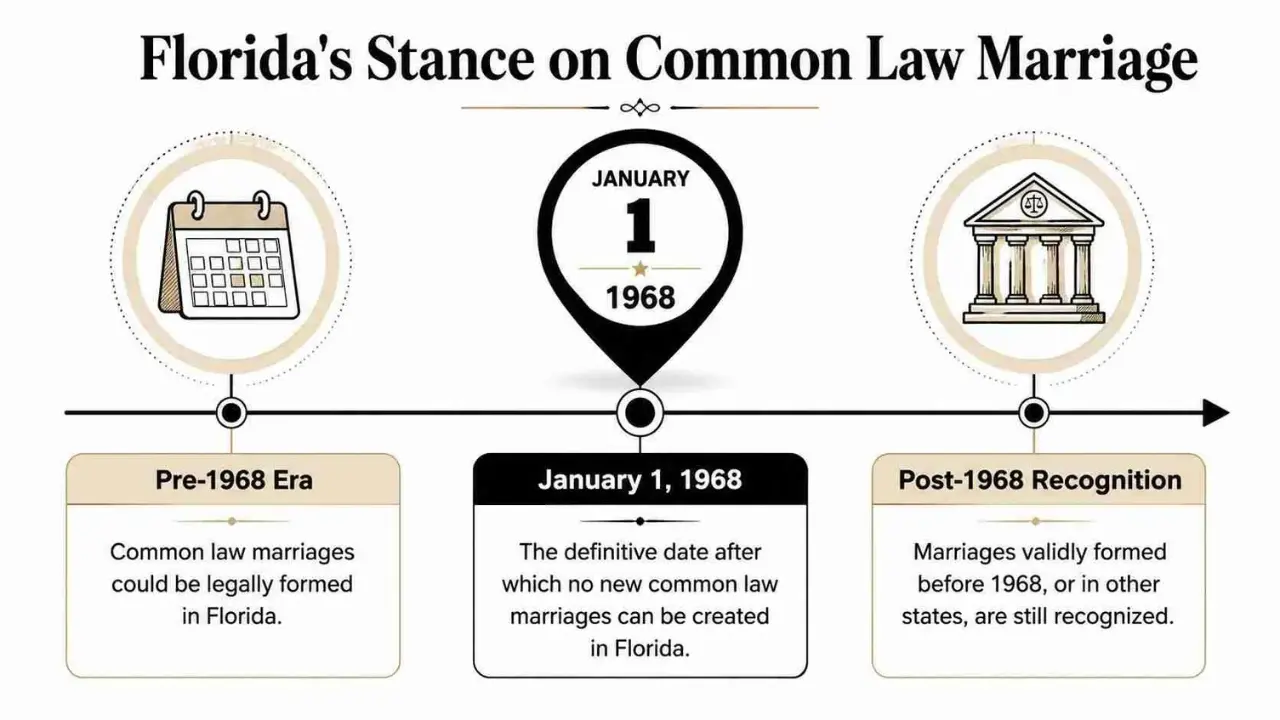
Florida officially ended the creation of new common law marriages on January 1, 1968. Since that date, couples must obtain a marriage license and complete a legal marriage ceremony to become legally married in the state.
Living together, sharing finances, or calling each other husband and wife does not create a legal marriage under Florida law.
What Is Common Law Marriage?
A common law marriage is a relationship where a couple becomes legally married without obtaining a marriage license or holding a formal wedding ceremony. Instead, they meet certain legal requirements established by the state.
Although each state has different rules, common law marriage generally requires:
- Both partners are legally able to marry.
- Both partners intend to be married.
- The couple lives together.
- The couple presents themselves publicly as married.
Not every state recognizes common law marriage. Florida is among the states that no longer allow new common law marriages.
Why Did Florida End Common Law Marriage?
One reason Florida eliminated common law marriage was to reduce legal disputes.
Without a marriage certificate, courts often had difficulty determining whether a couple intended to be married. These disagreements frequently involved property ownership, inheritance, and financial support after separation.
By requiring a marriage license and ceremony, Florida created a clear legal standard that protects both spouses and simplifies court proceedings.
Does Florida Recognize Common Law Marriages From Other States?
Although the answer to does florida have common law marriage is no, Florida does recognize valid common law marriages established in states where they are legal.
For example, if a couple legally entered into a common law marriage in another state before moving to Florida, Florida generally recognizes that marriage.
This happens because states usually honor marriages that were legally created elsewhere under the legal principle known as “full faith and credit.”
However, the marriage must have been valid under the laws of the state where it was formed.
Living Together Does Not Create a Marriage
Many people mistakenly believe that living together for seven or ten years automatically creates a marriage.
This is false in Florida.
No matter how long a couple has lived together, they are not legally married unless they completed a legal marriage.
Even if they:
- Share a home
- Raise children together
- Share bank accounts
- File taxes separately
- Introduce each other as spouses
None of these actions create a legal marriage in Florida.
This is one of the biggest reasons people continue asking, does florida have common law marriage.
What Rights Do Unmarried Couples Have?
Unmarried couples have fewer legal protections than married couples.
Without a legal marriage, partners may not automatically receive important rights involving:
| Legal Matter | Married Couples | Unmarried Couples |
|---|---|---|
| Inheritance | Yes | Usually No |
| Health care decisions | Yes | Usually No |
| Spousal support | Yes | No |
| Property division | Protected by family law | Depends on ownership |
| Survivor benefits | Often available | Usually unavailable |
Because of these differences, unmarried couples should consider legal planning if they choose not to marry.
Can Unmarried Couples Protect Themselves?
Yes. Couples who are not legally married can still protect their financial and personal interests.
Common legal documents include:
- Wills
- Durable powers of attorney
- Health care surrogate forms
- Living wills
- Cohabitation agreements
- Joint ownership agreements
These documents help clarify each partner’s wishes and reduce future legal disputes.
Isotonix Lawsuit: Unveiling the Legal Disputes Surrounding the Brand
Property Ownership for Unmarried Couples
Property ownership can become complicated if unmarried couples separate.
If only one person’s name appears on a deed or vehicle title, that person usually owns the property.
Joint ownership should always be documented clearly.
Unlike divorce, no Florida law automatically divides property fairly between unmarried partners.
This is another important reason why people researching does florida have common law marriage should understand the legal differences.
Streamate Lawsuit Explained: Key Insights and Legal Implications
What Happens If One Partner Dies?
Without a legal marriage or estate planning, the surviving partner may receive nothing.
Florida inheritance laws generally favor:
- Spouses
- Children
- Parents
- Other blood relatives
An unmarried partner does not automatically inherit property.
Creating a valid will is one of the best ways to protect your partner.
Common Myths About Common Law Marriage
Many myths continue to circulate online. Here are some of the most common.
Myth 1: Living Together for Seven Years Creates a Marriage
False.
Florida has no rule stating that seven years of cohabitation creates a marriage.
Myth 2: Having Children Makes You Married
False.
Children do not create a legal marriage.
Parents still have responsibilities toward their children, but their relationship status remains unchanged.
Myth 3: Sharing Bills Means You Are Married
False.
Joint bank accounts, mortgages, or utility bills do not establish a legal marriage.
Myth 4: Calling Each Other Husband and Wife Is Enough
False.
Using those titles socially has no legal effect in Florida.
Should Couples Consider Marriage?
Marriage provides many legal protections that unmarried couples do not automatically receive.
These include:
- Automatic inheritance rights
- Medical decision-making authority
- Tax benefits
- Spousal retirement benefits
- Easier property division
- Access to family law protections
Couples who want these protections should complete a legal marriage rather than relying on assumptions about common law marriage.
Frequently Asked Questions
Does Florida have common law marriage today?
No. Florida has not allowed new common law marriages since January 1, 1968.
Does Florida recognize common law marriage from another state?
Yes. Florida generally recognizes common law marriages that were legally established in states where they are valid.
Can living together for many years make you legally married?
No. Living together alone does not create a marriage in Florida.
Can unmarried couples own property together?
Yes. They can jointly own homes, vehicles, and other assets, but ownership should be properly documented.
How can unmarried couples protect themselves?
They should consider wills, powers of attorney, cohabitation agreements, and other legal planning documents.
Conclusion
If you have been asking, does florida have common law marriage, the answer is straightforward. Florida does not allow couples to establish new common law marriages simply by living together. A legal marriage requires a marriage license and an official ceremony.
However, Florida does recognize valid common law marriages that were legally created in states where they are permitted. For unmarried couples living in Florida, proper legal planning is essential to protect property, finances, health care decisions, and inheritance rights. Understanding these rules helps couples make informed decisions about their future and avoid unexpected legal challenges.